









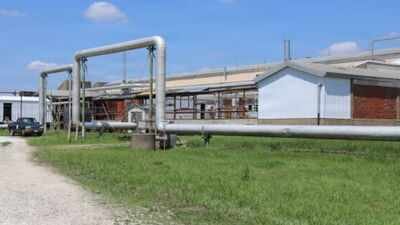
The US Army is seeking to bypass a federal court order blocking its plan to detonate five tonnes of potentially dangerous explosive chemicals in Iowa, arguing that delaying the operation could increase the risk of an accidental explosion as temperatures drop.Government lawyers urged the 8th US Circuit Court of Appeals to allow the Army to proceed with the operation, saying swift action was necessary to protect military personnel and nearby communities, according to an Associated Press report.“Protection of human health and the environment demand action now, not delay,” the government lawyers said in a court filing late Saturday, adding that the Army wanted to carry out the detonation by Tuesday.The planned operation involves destroying 68 drums containing around five tonnes of lead azide, an explosive chemical used in the manufacture of munitions. The material was discovered in a deteriorating condition at the Iowa Army Ammunition Plant in March.A federal appeals court had earlier put the operation on hold after environmental groups challenged an emergency permit issued by the US Environmental Protection Agency (EPA). The detonation was initially scheduled for Friday but was postponed to Monday following concerns raised by residents and elected officials.
Why the Army wants to proceed with the explosion
Army officials have argued that the lead azide has become extremely unstable because of its deteriorating condition and could explode accidentally if handled or transported.According to officials, crystallisation of the chemical inside the drums has increased the risk of an uncontrolled explosion. They have warned that even slight friction or movement could trigger a blast, making relocation or alternative disposal methods potentially dangerous.Government lawyers also argued that falling temperatures could further destabilise the material, increasing the threat of an accidental explosion. They said temperatures in the region were expected to drop below 30 degrees Fahrenheit (minus 1 degree Celsius) in the coming days.The Army has maintained that a controlled detonation is the safest available option after consulting explosives experts, engineers and environmental safety specialists.However, environmental groups have questioned whether all possible alternatives were properly examined. They have also criticised authorities for failing to provide sufficient information to residents who could be affected by the operation.
Residents fear lead contamination, health risks
The proposed explosion has triggered concerns among residents in and around Middletown, a small community in southeastern Iowa located about 160 miles from Des Moines.The Army has acknowledged that the detonation could release lead-containing particles into the air, forming a plume that could eventually settle on the ground.Lead exposure can cause serious health problems, and there is no known safe level of lead exposure. Residents have expressed concerns about possible contamination of farmland, crops, livestock, pets and nearby properties.Some residents have also been warned about potential damage to windows due to the noise and ground vibrations caused by the explosion.The Army had recommended that people in affected areas remain indoors, keep doors and windows closed, bring pets and livestock inside and clean outdoor surfaces after the operation. Residents were also advised to take precautions to prevent contaminated dust from entering their homes.Environmental groups, including the Iowa Environmental Council and Sierra Club, have called for greater transparency and a review of the emergency permit granted by the EPA.They argue that communities deserve more advance notice and clearer information about the possible consequences of the explosion.