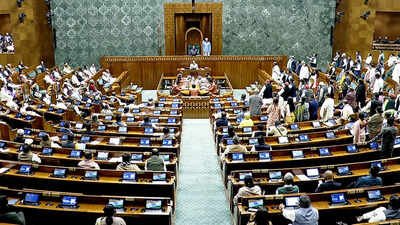
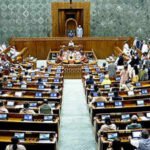



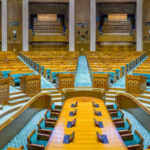

NEW DELHI: The proposed expansion of Lok Sabha to up to 850 seats and redrawing of constituencies using the 2011 Census as base may be an opportunity to carve out smaller constituencies in densely populated urban and peri-urban areas, giving rapidly expanding cities and their suburbs more focused political representation.Such a move could bring issues such as urban planning, air pollution, public transport, housing, water supply, waste management and municipal governance into sharper focus in Parliament, particularly as metropolitan areas expand beyond their traditional boundaries.Less interest among urban people in voting in constituencies which have a decisive share of rural votes has been flagged as a reason why political representatives don’t take up urban issues that passionately. Experts say that addressing local civic grievances of millions of people becomes nearly impossible for a single elected representative. Smaller urban constituencies help MPs and MLAs stay closer to the electorate, manage the development works effectively and use area development funds prudently. “Rapid urbanisation has put pressure on civic infrastructure, with many cities expanding faster than the capacity of local bodies to provide services. Smaller constituencies could help ensure more focus on the development needs of different parts of a city, including roads, drainage, water supply, public transport and waste management,” said a retired Delhi bureaucrat, requesting anonymity.“It could also make elected representatives more accessible and accountable for addressing local infrastructure gaps,” he added.A June 2026 working paper by the PM’s Economic Advisory Council called for special attention to urban constituencies during delimitation. It argued that urbanisation, along with demographic and linguistic composition, should count alongside constituency size. Constituencies with larger urban populations had nearly a two-point turnout advantage in 2009; by 2024, their turnout was 2.3 points lower than in less urbanised constituencies.
Share your thoughts in the comments
Be respectful · TOI community guidelines
The paper identified Hyderabad, Secunderabad and Kolkata Dakshin for possible three-way division, along with secondary urban and mixed constituencies such as Visakhapatnam, Dharwad, Belgaum, Bijapur, Bhavnagar and Rajkot.At present, no Lok Sabha constituency has an official tag of urban or rural, as current constituency boundaries reflect older demographic baselines. Different studies estimate the number of urban constituencies in the range of 53 to 89 based on voting analysis and geography.