









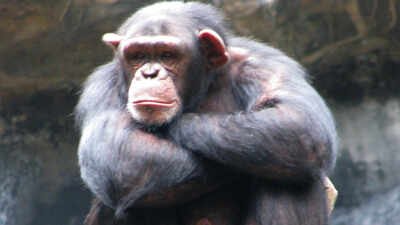
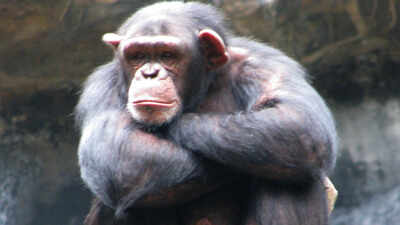
Imagine that a virus which infected an animal millions of years ago could still have an influence on how its descendants develop, long after the infection itself had disappeared. While viruses are generally associated with illnesses and their ability to spread between individuals, their relationship with living organisms can become considerably more complicated when it comes to evolution. Some viruses leave behind traces of their genetic material, which become incorporated into the DNA of their hosts and can continue to be passed down through generations.A fascinating example of this has now emerged from research conducted by scientists at Lund University in Sweden, who have found that an ancient viral insertion in chimpanzee DNA switches off a gene that remains active in humans and plays a role in early brain development. According to a study published in Science Advances on October 23, 2026, this genetic difference could offer new insights into how human and chimpanzee brains have developed differently over millions of years.The research, titled “Retroviral insertions contributed to the divergence of human and chimpanzee brains” examines how an ancient viral infection may have influenced gene regulation in the two species, offering another perspective on the evolutionary changes that distinguish us from our closest living relatives.
When viruses become part of our DNA
Humans and chimpanzees share a remarkably similar genetic makeup, but this does not necessarily mean that the genes they carry are always used in the same way. Beyond the genes themselves, the way in which they are regulated, determining when they become active or are switched off, can also make a difference to how an organism develops.The researchers focused on a group of genetic sequences known as endogenous retroviruses. These are remnants of viruses that, during an infection, inserted their genetic material into the DNA of their hosts. When such an insertion occurs in germline cells, which give rise to reproductive cells, the viral sequence can become part of the genetic material inherited by subsequent generations.PTERV1, an ancient retrovirus that entered the chimpanzee lineage but is absent from the human genome, was also studied. Its genetic material appears at numerous locations within chimpanzee DNA. The researchers identified 158 PTERV1 insertions, which were associated with the formation of more than 150 species-specific heterochromatin domains.The team found that these viral insertions were heavily affected by a process called DNA methylation, a chemical modification that helps regulate gene activity. In simple terms, methylation can act like a switch, helping determine whether particular sections of DNA remain accessible for gene expression or become switched off.
The gene study
Among the viral insertions, the researchers identified one particularly significant sequence on chromosome 19 in chimpanzees. This insertion was found to silence a gene known as LINC00662, which produces a long non-coding RNA that is active in humans during early brain development.Long non-coding RNAs are known to influence how other genes and cellular processes behave. In this instance, LINC00662 appears to play an important role in neuronal development, particularly in the maturation of nerve cells and the growth of their extensions.To understand what was happening during brain development, the researchers used stem cells from both chimpanzees and humans to create brain organoids. These are small, three-dimensional structures grown in laboratories that resemble certain features of developing brain tissue. Although they are not fully functioning brains, they allow scientists to study aspects of early neural development under controlled conditions.Upon comparing the two, the team noticed that LINC00662 was strongly expressed in human brain organoids, whereas its activity was completely silenced in the chimpanzee models.The researchers then wanted to establish whether the viral insertion was actually responsible for this difference, rather than simply occurring alongside it. Using CRISPR-Cas9, a gene-editing technique that allows scientists to make targeted changes to DNA, they removed the PTERV1 sequence from chimpanzee cells. Following its removal, the expression of LINC00662 was restored in the chimpanzee cells.
The developing brain
The team also investigated what happens when LINC00662 itself is switched off in human brain organoids. By using CRISPR to suppress its activity, they observed changes in the development of neuronal extensions, known as neurites, which are important for the formation of connections between nerve cells. These include axons, which carry signals away from nerve cells, and dendrites, which receive signals from other neurons. Both are important components of communication within the brain.However, the study does not establish that this single gene alone can explain the differences between chimpanzee and human brains, nor does it demonstrate that the viral insertion alone accounts for the evolution of human cognitive abilities.The findings essentially suggest that LINC00662 contributes to processes involved in the development and organisation of neural connections. Its absence or reduced activity could therefore influence aspects of how developing nerve cells mature.