







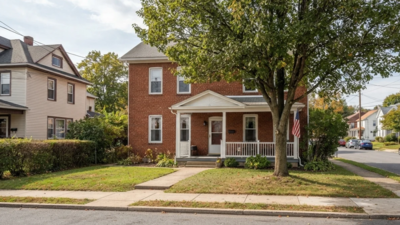
A Pennsylvania widow has won a court fight to keep the home she shared with her husband for over 45 years, after her husband’s two children from an earlier marriage had claimed a share of the house after he died. On 25 November 2026, the Pennsylvania Superior Court backed a lower court ruling for her, finding the couple owned the house together even though only her husband’s name was on the deed, so the home belongs solely to the widow, Jane L. Shellhammer, and is not part of her late husband’s estate. The fight centered on a house at 776 Edgemont Avenue in Palmerton, Carbon County, which the couple bought in September 1979 for $6,000, where Jane Shellhammer has lived for more than 45 years and paid the bills, upkeep, repairs, upgrades and property taxes on her own after her husband died. In its ruling, the Superior Court said the proof backed the finding that the pair held the home as tenants by the entirety, a form of joint ownership Pennsylvania lets married couples use where full ownership moves straight to the surviving spouse when one spouse dies. The court turned down an appeal by Harold T. Shellhammer, who was a son and the administrator of his father’s estate, and his sister, Teresa T. Trudich, while legal site Justia published the full ruling.
How the couple bought the house
Jane Shellhammer married Harold Lloyd Shellhammer in 1978, and he had two children from an earlier marriage. Right after the wedding, she moved into 776 Edgemont Avenue, which belonged to Harold’s mother, May Irene Shellhammer, before leaving about four months later after personal clashes with her mother-in-law and sister-in-law, according to the court record. She rented a place in a nearby town and later bought another house with her husband farther down the same street, while Harold stayed with his mother and visited his wife often at both homes.May Irene Shellhammer died on 15 July 1979, and her will let her son buy the Edgemont Avenue house, along with its furniture, contents and appliances, for $6,000, which the couple paid using money from their joint account at Citizens Bank and Trust Company in Palmerton. They finished the buy on 7 September 1979, yet the deed listed only Harold Shellhammer as owner, and Jane told the court she had never seen the deed until she got a letter from the children’s lawyer shortly before the lawsuit started. The court record also noted that Harold had little schooling and could not read or write, while Jane said he told her after the buy that the house belonged to both of them, and their granddaughter, Kerri Ahner, who lived with them for long stretches, also remembered Harold saying the couple owned the home together.
Children challenged the widow’s ownership
Harold died without a will on 11 March 2002, and after his death, Jane stayed in the house and covered its costs, with the court finding she paid the utility bills, upkeep costs, repair bills, upgrade costs and property taxes herself. Neither of Harold’s children paid toward the home’s care or costs while their father was alive or after he died, according to the court record.The legal fight started in December 2022 when Harold T. Shellhammer, acting for himself and as administrator of his father’s estate, and Teresa T. Trudich filed a case to divide the property, arguing the house should be counted as part of their father’s estate. In January 2023, they filed a second case to settle legal ownership of the house, and the two cases were joined for trial in May 2023. A judge held a non-jury trial on 19 April 2024, and on 31 December 2024, the Carbon County Court of Common Pleas ruled for Jane, finding she owned the house and throwing out the children’s request to divide it; the children tried to overturn that ruling, but their post-trial request failed on 30 December 2025, and judgment was officially entered for Jane on 8 January 2026.
Why the appeal court backed her
The children took the case to the Pennsylvania Superior Court, arguing state inheritance law gave them a share of their father’s property under Section 2102 of the Probate, Estates and Fiduciary Code, which gives a surviving spouse half of an estate when someone dies without a will and leaves children who are not also the surviving spouse’s children. They also fought the lower court’s finding that their father and stepmother held the house together as tenants by the entirety. The appeals court looked at both points, noting that Pennsylvania law usually treats property held by a married couple as a tenancy by the entirety unless clear and convincing proof shows the couple did not mean to own it together, and said this ownership form calls for a valid marriage and four rules covering timing of ownership, title, possession and shared interest in the property.In Jane’s case, the judges found the evidence backed the lower court’s ruling because the pair were married when they bought the house and the $6,000 came from a bank account they held jointly as husband and wife. Even though only Harold’s name was on the deed, the house was their family home for decades, and the court also weighed Harold’s remarks to Jane and their granddaughter that both spouses owned the property, noted Jane had lived in the home for 45 years by the time of the trial, pointed to proof that she and Harold split upkeep costs while married and Jane paid them alone after he died, and noted Jane testified the children never told her she did not own the home, offered to help pay its costs, or told her to move out before the court fight began.
Inheritance law did not change the outcome
The Superior Court agreed with the lower court that the inheritance law cited by the children did not decide ownership here, since holding the house as tenants by the entirety meant Jane became its sole owner right away when Harold died. The judges explained that a surviving spouse does not inherit a new share in that setup, because ownership stays with the surviving spouse under the joint ownership already in place, so the house did not go into Harold’s estate to be split under intestacy rules. Seeing no reason to overturn the lower court’s findings or how it weighed the proof, the court upheld the 8 January 2026 judgment for Jane on 25 November 2026, which also made a separate request by the children, filed on 3 August 2026 to submit another appeal brief, pointless and led the court to dismiss that request as moot. The decision leaves Jane Shellhammer as sole owner of the Palmerton home she has lived in for over four decades.