



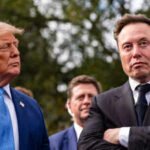




Huawei has been at the center of rising US-Chinese tensions over technology and security for over years. The company was designated as ‘national security threat’ in 2019, during the first term of Donald Trump. However, according to Huawei founder Ren Zhengfei, United States trade sanctions meant to cripple one of China’s biggest technology companies Huawei has in fact propelled the company and the country (Chine) toward technological self-reliance. In a rare interview at Huawei’s Shenzhen headquarters in October, published recently by The New York Times, the 82-year-old chief executive officer (CEO) reflected on the years following the first Donald Trump administration’s campaign to sever Huawei from global telecom networks and advanced semiconductors.“Pass on our thanks to him, and also share the story of the Trump Corridor as well,” Ren told Times reporters Keith Bradsher and Adam Satariano. Inside Huawei’s headquarters, executives have reportedly nicknamed a gilded hallway the “Trump Corridor” in reference to the US leader whose policies forced the company to overhaul its supply chain. Following the crackdown, Ren said, Huawei transformed into “a company of our own country.”
Huawei and subsidiaries convicted of sanctions violations, fraud, conspiracy to steal trade secrets
The publication of the interview comes amid mounting legal and regulatory pressure from Washington. Two days prior to the report’s release, a federal jury in New York convicted Huawei of bank fraud linked to Iran and conspiring to steal trade secrets from American companies — verdicts the company dismissed as “without legal or factual merit.”Simultaneously, the U.S. has moved to close loopholes in its semiconductor export controls. On November 16, Washington introduced new restrictions limiting remote access to American artificial intelligence chips via overseas data centers.As US barriers tighten around market leader Nvidia, Huawei’s Ascend processors have emerged as China’s primary domestic alternative, The New York Times reported. Backed by an annual research and development budget exceeding $27 billion, Huawei has collaborated with prominent Chinese AI developers, including DeepSeek, to optimize their models for Ascend hardware. While acknowledging that individual Huawei chips lag behind American counterparts, the company maintains it can achieve comparable performance by networking massive clusters of processors together.
When Huawei became ‘national security threat’
The initial sanctions on Huawei were levied during Trump’s first term. Ren asserted that the pressure forged a resilient domestic ecosystem. Speaking prior to recent leadership changes at Nvidia, he expressed confidence that China will eventually surpass the US in semiconductor manufacturing, stating, “It’s just a matter of time.”While voicing hope that Washington and Beijing can eventually mend ties, Ren maintained that Huawei is no longer vulnerable to American supply cutoffs. “We have now established a complete chain that allows us to survive,” he told the Times.In 2020, Trump government cut off Huawei’s access to US components and technology, including Google’s music and other smartphone services, last year. Those penalties were tightened in May when the White House barred vendors worldwide from using U.S. technology to produce components for Huawei. In August 2020, the Trump administration further tightened restrictions on China’s Huawei, seeking to starve it of crucial components by cutting off all access to US technology.“We don’t want their equipment in the United States because they spy on us,” Trump had told Fox News. “And any country that uses it, we’re not going to do anything in terms of sharing intelligence.”Huawei has more than 200,000 employees and operates in approximately 170 countries.