







Children have a rather interesting way of showing that they are angry. More than our own angry parents, we sometimes dread an angry child. A toy they cannot have, food they do not like, or even simply being told no can turn into a full-blown tantrum within seconds. For adults, these outbursts may seem unnecessary or even frustrating, but for a young child, they are often one of the few ways of expressing emotions they have not yet learnt to understand. And it is the responsibility of parents to teach their kids how to manage these feelings.But what happens to the child when parents themselves run out of patience? That is something the recent study explores. Being born is not something kids decide; it is the decision of the parents to have children, and each child, by that logic, deserves the same amount of love and patience. But what if even mothers’ love has a saturation point?A recent study published titled The unique effect of the number of children on mothers’ acceptance of children’s negative emotions in the journal Cognition and Emotion has explored this relationship, examining whether the number of children a mother has influences how accepting she is of her young child’s negative emotions. The findings offer an interesting perspective on how family size may shape the way mothers respond to childhood anger and frustration.
What the study found about mothers of larger families
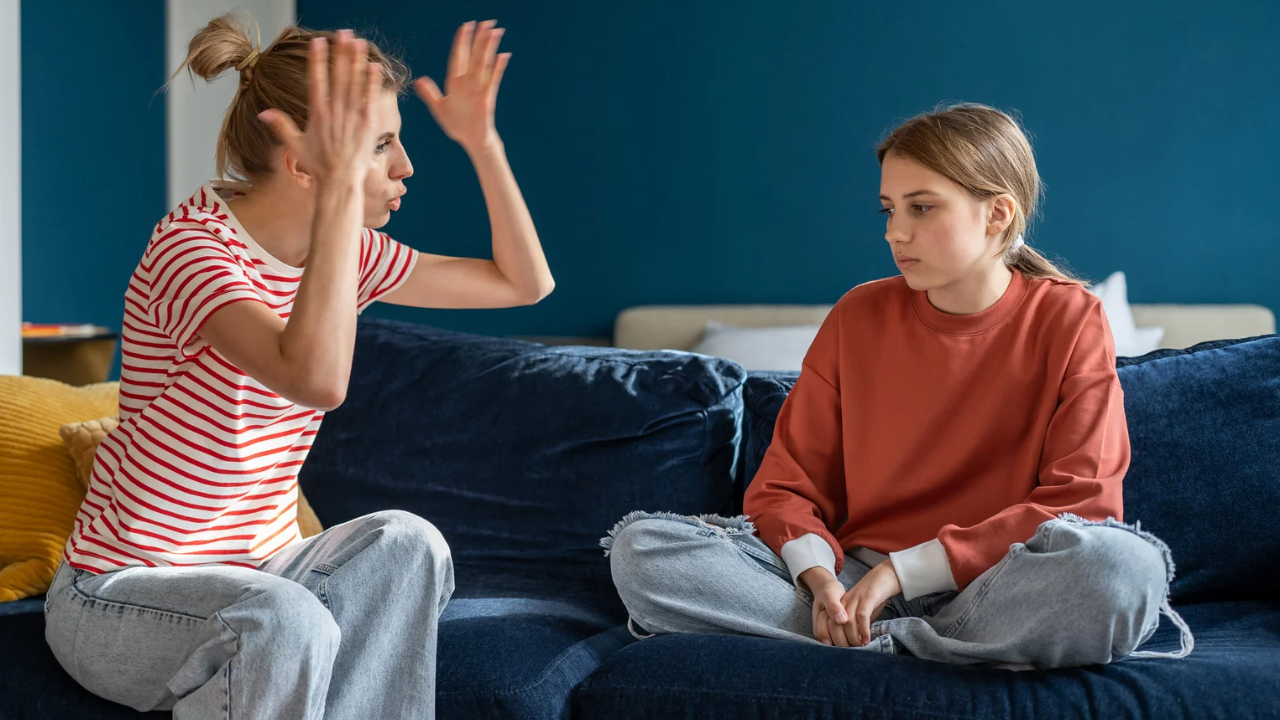
Representative Image of Mother losing patience when dealing with children (Canva)
To understand this relationship, researchers surveyed 226 mothers in Portugal who had at least one child between the ages of two and six. They looked at how mothers perceived and responded to different negative emotions expressed by their young children, particularly anger, sadness and fear. The aim was to understand whether the number of children in a family had any connection with how acceptable mothers found these emotional expressions.The findings showed a noticeable difference among mothers based on family size. Those raising three or more children were less accepting of their young children’s expressions of anger and frustration than mothers with one or two children. Interestingly, this difference remained even after the researchers accounted for factors such as parenting stress and mindful parenting, so parenting stress alone cannot be blamed.But what makes the finding particularly interesting is that this pattern was not observed across every negative emotion. The number of children a mother had was associated with her acceptance of anger and frustration, but not in the same way with her acceptance of emotions such as sadness and fear. This suggests that the challenge may not be with negative emotions as a whole, but with the more outward expressions of displeasure that can sometimes make parenting difficult.
Why mothers may find it harder to accept anger in larger families
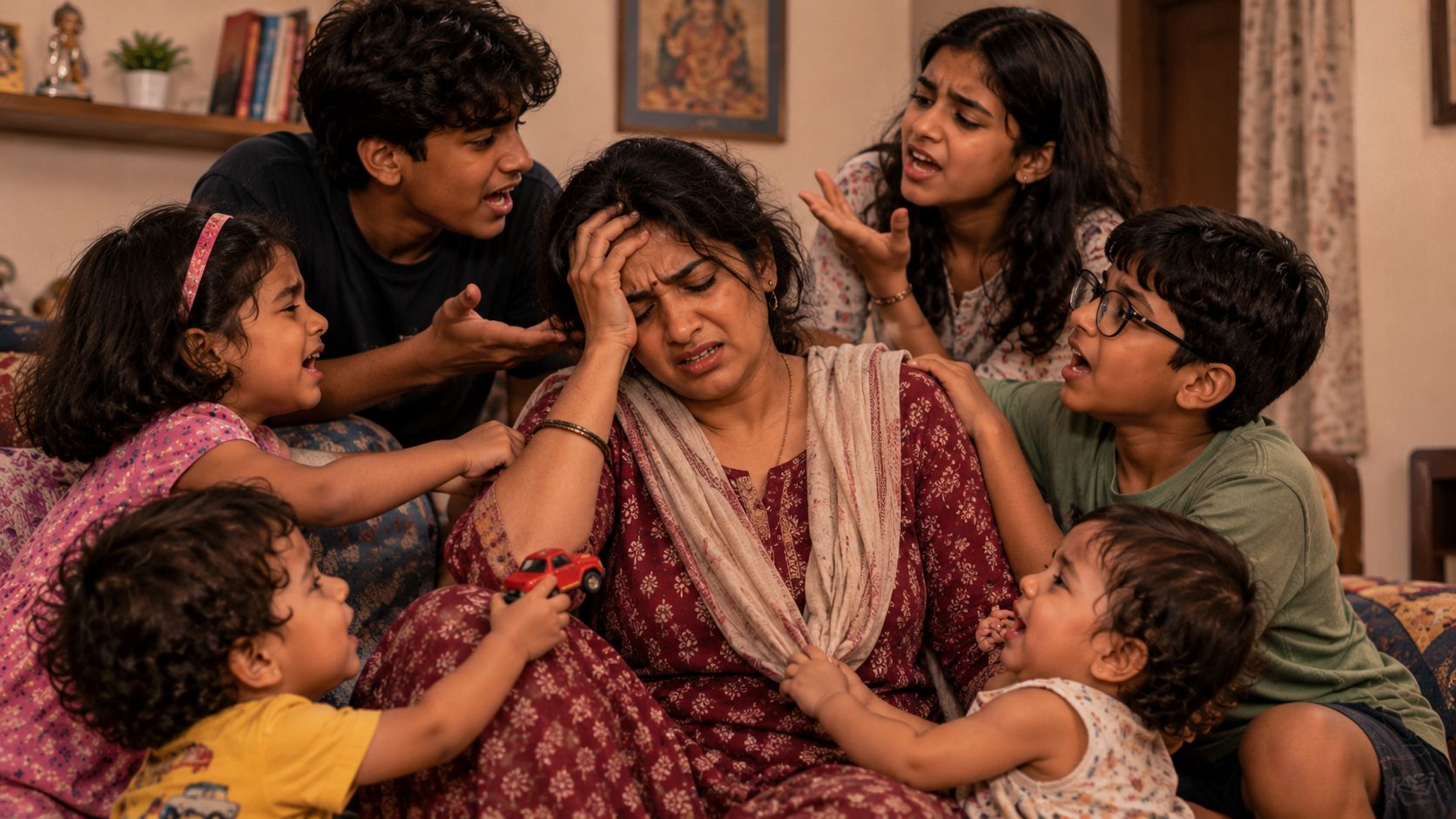
Mothers allegedly get more irritated and frustrated when in large families (AI generated)
Raising a child requires patience, but raising several children also means navigating different personalities, needs and emotions under the same roof. With each child having their own needs and a different version of you to attend to, it might make the day a little frustrating. A parent may have to attend to one child’s needs while managing another’s tantrum, resolving disagreements between siblings or simply keeping up with the everyday demands of the household. In such an environment, a child’s anger may become another emotional demand that a mother has to respond to, sometimes leaving her with less room to accommodate an outburst.Anger is a particularly difficult emotion to handle because it often gets expressed more visibly than other emotions. A young child may shout, resist instructions, throw things or become upset when they do not get what they want. While these reactions are a part of emotional development, they can test a parent’s patience, particularly when several children require attention at the same time.However, it is important to understand that the study does not establish that mothers with larger families are necessarily less patient or less loving, or that having more children directly causes this difference. It just shows an association between family size and mothers’ acceptance of childhood anger, leaving room for further research into the reasons behind it.And at the end of the day, mothers are human too. They have their own limits, frustrations, responsibilities and difficult days, and expecting them to respond with endless patience to every situation is hardly realistic. But a child is not responsible for the decision to bring them into the world, nor should they have to bear the consequences of an adult’s exhaustion simply for expressing emotions they are still learning to understand. Every child deserves to feel that their emotions have a place in the family, even when those emotions are difficult to deal with. Understanding a mother’s limitations should not mean overlooking a child’s emotional needs. Both deserve empathy, and parenting must leave room for both.