









Indian airlines have again extended their cancellations to Saudi Arabia as conflict in the region continues. For families on both sides of the route, the delay has meant missed visits, longer journeys and a constant worry about what comes next.For Indian families with relatives in Saudi Arabia, planning a trip home now begins with a question no booking page can answer: when will the planes fly again?A route that keeps closingAir India and Air India Express have extended the suspension of their flights to and from Jeddah until November 30, citing the security situation in Saudi Arabia. Jeddah services had earlier been cancelled until November 24, while flights to Riyadh and Dammam were already cancelled until November 30.“Due to the prevailing situation in the region, Air India and Air India Express flights to and from Jeddah, Dammam and Riyadh will remain suspended until 30 November 2026,” Air India said in a post on X on Monday.The other Indian carriers on the route have taken similar steps. On November 18, IndiGo extended the cancellation of flights connecting Saudi Arabian cities until November 30. Akasa Air has cancelled its flights to and from Riyadh and Jeddah until the same date.With four airlines grounding the same routes for the same period, families who depend on direct flights have few easy options left.The conflict behind the cancellationsThe suspensions follow months of escalating violence. In recent months, various Saudi Arabian cities and infrastructure have come under attack from the Houthis, the Iran-aligned group fighting the Saudi-backed government in Yemen. Since the fighting with the kingdom escalated over the summer, the Houthis have repeatedly targeted Saudi oil facilities, including the Jazan refinery, which was attacked again in the latest incident. Saudi Arabia’s Energy Ministry said an attack on an oil refinery in the kingdom’s southwest killed a Nepalese worker.

Yemen’s Houthi rebels and their areas of control
The latest incidents mark a further escalation, with strikes from both sides targeting airports, energy facilities and other civilian and economic infrastructure.The violence is not one-sided. Saudi airstrikes hit western and southwestern Yemen overnight, according to Houthi officials and media. Anees al-Asbahi, a spokesperson for the Houthi-run health ministry, said multiple strikes across Taiz province killed four people, including a child, and blamed Saudi Arabia. The Associated Press said it could not independently verify the claims made by al-Asbahi or by Al-Masirah, the rebel-run television channel.Residents of Sanaa, the rebel-held capital, described a life of recurring explosions. “We have to endure these sounds every now and then, and they have health implications for our kids,” said Khalil al-Makhlafi, who lives in the southern part of the city, near military camps.The conflict could widen further. The Houthis threatened to attack Saudi ports if the Yemeni port of Hodeidah came under attack. “The port of Hodeidah handles 90 percent of imported goods into Yemen. If it is closed, it could bring the humanitarian situation to the brink of collapse,” said Al Jazeera’s Yousef Mawry, reporting from Sanaa.A sister in Riyadh and a journey that grew longerFor Saad, the effect of the flight ban is personal. His sister and her husband live in Riyadh. They were supposed to travel to India because of a family emergency, but could not.Their only option was to go to Dubai from Riyadh and take a flight from there. “Usually it’s a 5-6 hour journey which would have taken more than 20 hours. So they postponed it,” Saad said.The couple is still in Riyadh, and the delay has left the family caught between two worries. “They’re still stuck there since they can’t make it to India. There’s also a worry that if they do come, they won’t be able to return because of the tense situation,” he said.
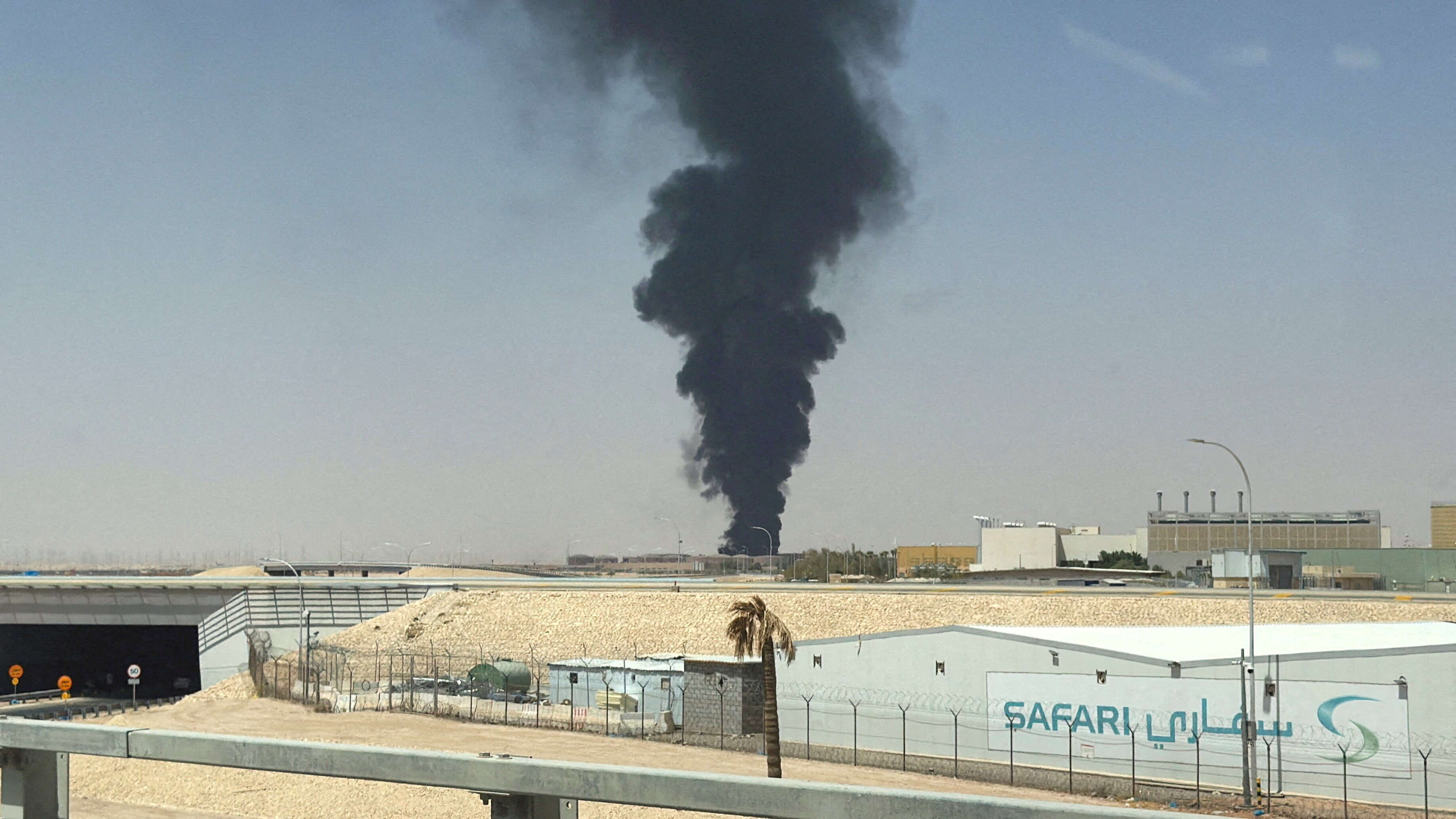
A thick plume of black smoke rises from the fuel storage area at King Khalid International Airport in Riyadh, Saudi Arabia (Image: Reuters)
Saad said his sense of the risk has changed as the conflict has moved closer to the city. “The situation previously remained manageable as strikes were confined to refineries and airports located at a distance from the urban center. However, the landscape has shifted with recent targeting of central city locations, leading to heightened apprehension,” he said.He now speaks to his sister more often than he used to. “I make it a point to call her twice daily to ensure that she is doing well,” he said.Fear, then a fragile calm in KuwaitThe effects of the conflict are felt beyond Saudi Arabia. A man from India who works in Kuwait told TOI that the regional conflict upended his plans too.He last travelled from Kuwait to India on September 26, 2025, and returned in November 2025. His next trip was planned for March 2026, a short vacation during Holi. “Unfortunately, the conflict started around the same time, and I had to cancel my travel plans,” he said.He said Kuwait International Airport was affected by a drone attack around that period, which disrupted operations. Terminal 4 later partially resumed, but flights were limited to certain destinations, and ticket prices were extremely high. “Naturally, there was considerable panic among the public, especially among expatriates who wanted to return to their home countries,” he said.Kuwait’s distance from Iran, approximately 180 to 200 kilometres, added to the anxiety. People worried about possible escalation, and safety advisories and precautionary guidelines were being circulated.Mobile phone alerts became part of daily life. “Whenever there was an air threat, emergency sirens would sound on our phones. Sometimes, we received these alerts several times during the night, even around 20 times,” he said.He credits the authorities with keeping the country running. Air defence systems intercepted incoming threats, and the government maintained food supplies, accommodation arrangements and other essential services. There were some concerns about water supply and possible communication disruptions after damage to undersea fibre-optic cables, but he said these did not significantly affect daily life.“Initially, there was certainly fear and uncertainty. However, I believe the Kuwaiti authorities handled the situation responsibly,” he said. “At present, I feel much more comfortable compared to the initial period of the conflict. From what I can see, the threat level has reduced significantly, and our daily life and work are almost back to normal.”He added that people still follow official safety instructions. “Of course, we remain alert and follow official safety instructions, but I do not feel the same level of panic that we experienced initially,” he said.Families watching the news from IndiaFor relatives at home, news bulletins have been harder to watch than the situation itself, as the Kuwait-based worker found. He is in touch with his family almost every day, by phone and video call. During the conflict, they grew very worried after watching the news.“They often told me that I should return to India as soon as possible and questioned why I needed to continue staying in Kuwait when the situation was uncertain,” he said.He said he understood their concern but could not act on it. “I explained that leaving a job suddenly was not a practical option, especially during that difficult period when travelling was also very challenging,” he said.Saad’s family faces a similar tension. Calls are frequent, yet they cannot ease the distance. The family wants the couple home, but the fear of being unable to return keeps them from pressing the point.Safety against salaryBehind these decisions lies a choice many Indian families in the Gulf know well. The man in Kuwait said his decision to stay or leave rests mainly on two things: the security situation and his professional responsibilities.“If the situation becomes seriously unsafe, I would certainly consider returning to India,” he said. “However, at present, things are gradually returning to normal, and I feel comfortable continuing my work here.”The second factor is work at home. “Finding a job with a comparable salary and suitable working conditions in India is not easy. I have family responsibilities, so maintaining my employment and financial stability is very important,” he said.For now, he intends to stay, and to visit his family when he can. “As long as the situation remains safe and stable, I would prefer to continue working in Kuwait. We also take our vacations from time to time and visit our families in India,” he said.His reasoning reflects how many families weigh the risk. “Ultimately, our priority is safety, but we also have to think about our families, careers and financial responsibilities,” he said.Waiting on a dateThe latest suspension is due to run until November 30, but the pattern so far gives families little reason to plan around it. Air India’s cancellation of Jeddah flights, which first ran until November 24, was extended to November 30 within days, and the other carriers have moved their dates in a similar way.For Saad’s sister and her husband in Riyadh, and for thousands of others in the Gulf, the wait continues. A family emergency has been postponed, a festival has been missed, and a short flight home now means a long detour or no journey at all.Until the skies over the region settle, the suitcases stay packed.